
A podcast about trends and taste.
Departments
︎︎︎Episodes
︎︎︎About Us
︎︎︎Contact
︎︎︎Hotline ︎
︎ News Subscribe ︎︎︎
︎Listen
︎Follow
︎Rate
︎Review
A podcast about trends and taste.
Department
︎︎︎Episodes
︎︎︎Human Resources
︎︎︎Information Technology
︎︎︎Hotline ︎
︎ News Subscribe ︎︎︎
︎Follow
︎Rate
︎Review
︎︎︎episode 80
Festival Fever: The Good, The Bad and The Fad
May 2nd, 2023
︎︎︎︎ Listen on Apple
︎︎︎︎ Listen of Spotify
︎︎︎︎ Listen on Stitcher
︎︎︎︎ Listen on Amazon
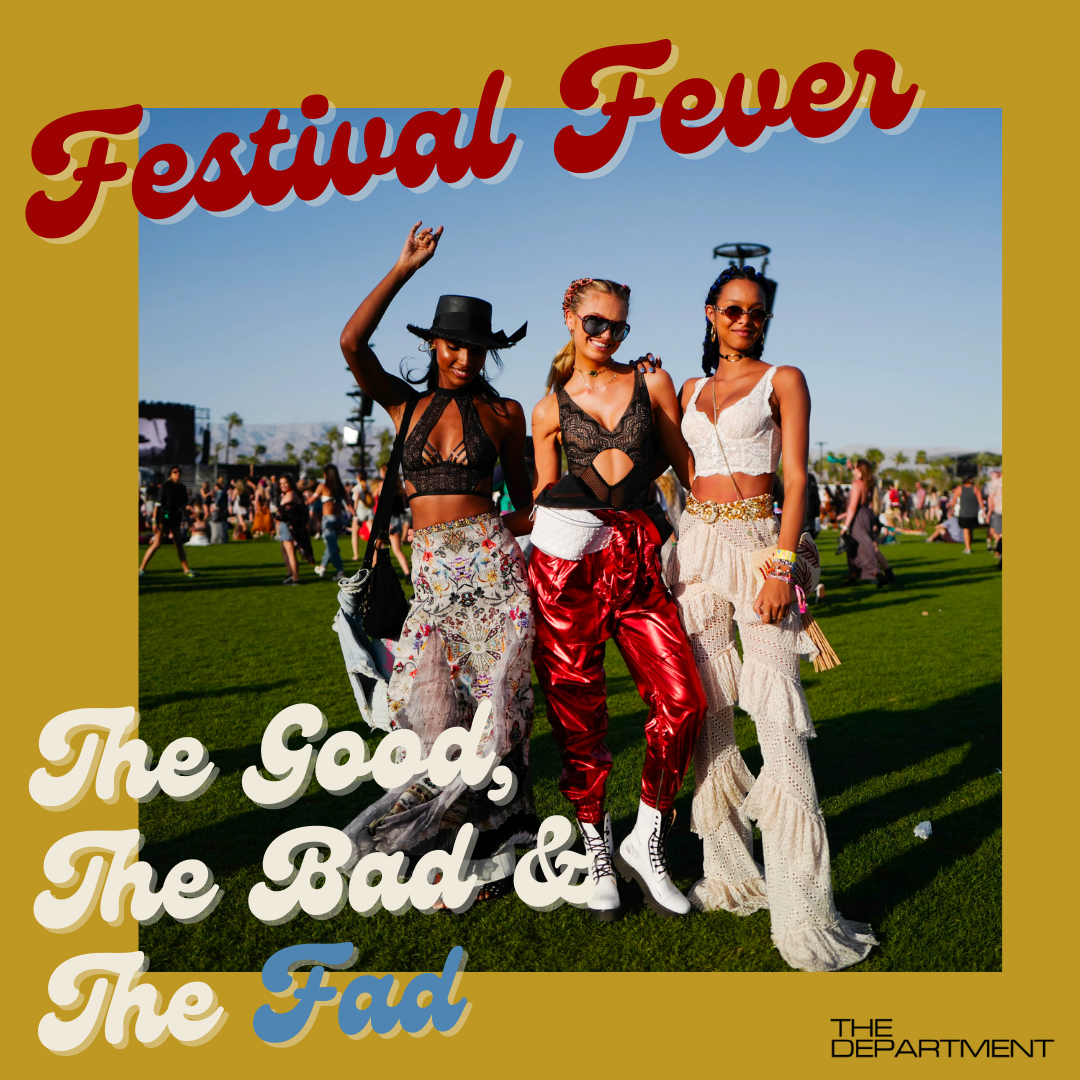
Welcome to episode 80 here at the Department. Festival season is upon us! Amanda and I are psyched to bring you this nugget of a podcast. Today we are bringing you all the drama, all the romance all the secret disdain of Festival trends. Particularly some of the trends that reside inside the modern festival experience and how they came to be the way they are.
Before we jump right in would like to report some updates on the aesthetic fronts - as predicted main aesthetic trends are breeding with other trends to make hybrids - and i think we are going to see a lot of them as folks get experimental for their festival looks.
Coastal Cowgirl - Anything Western-inspired is so very hot right now. So this iteration a year after Coastal Grandmother exploded onto the scene only makes sense. It is usually a bit relaxed and breezy with cowboy boots and if you are really adventurous a rimmed hat!

Western Barbie: Google Trends has spoken and "pink cowgirl outfit" is the most-searched Coachella outfit of the year according to Instyle

Barbie Baddie essentially swaps pink for black in the 90’s inspired tough girl look.

Now it is no secret that we both have worked in the fashion industry and Amanda - I have to admit that I didn’t have a lot of experience considering the mindset of the festival goer until I hit Nasty Gal. The festival season was as you mentioned - Christmas for us since a huge portion of our customer base was localized to the Southern California area meaning Coachella was truly our North Star but we also catered to the EDM festivals and everything in between. For those of you who haven’t lived in LA - the city practically empties out on the Coachella Weekends and we just had 2 blissful weekends free from the ‘Chella Crew. It is a time of celebration and reverie for those of us who prefer to stay in town and enjoy the city sans festival-going folk and their ilk.
One of the reasons I wanted to do this podcast stems from a recent search on Pinterest trends just to see what was going on in the collective mindsets - and Festival Fashion practically bolted up overnight reaching critical mass. Pinterest shows little graphs of interest and up until March 15th folks were going about their business barely thinking of their festival look and then BAM by March 21st is the hottest search term besides spring nails and spring meals.
This also won’t be shocking but 40% of the people searching are 25-34 and 75% are female - which may speak some to the Pinterest demographics
Other iterations and trending search terms include Baddie Festival Outfits and many iterations of Rave looks including Casual Rave Outfit - which speaks to the influence of the 90s and the obvious increase in Raves.
Now Amanda have you ever been to a festival?
So music festivals really date back to Ancient Greece where folks would gather for music but also other arts and sports. The modern iteration was founded by the white whale Woodstock and has been like chasing a high for promoters and concertgoers for decades.
Time Magazine did an article on how the festival has changed in 50 years since Woodstock in 2019.
“Though it was not the first event of its kind (the Newport Folk and Jazz Festivals, Milwaukee’s Summerfest and the Monterey Pop Festival predate Woodstock), the 1969 event holds a mythical place within American pop-cultural history. Festivals have since evolved from the DIY, communal spirit of Woodstock, growing into mainstream businesses that reap profits and embrace corporate sponsorships, as more than 32 million people attend them each year, according to Billboard. Coachella, one of the most popular festivals in the country, grossed $114.6 million in 2017, setting a major record for the first recurring festival franchise to earn more than $100 million.”
During the 2010’s the growth was fueled by many elements - but mainly by the shift of values that Millenials embraced indoctrinating the “experiential economy” into the modern mainstream ethos. A 2019 Deloitte survey of millennials—who made up 45% of the 32 million people who attended music festivals—found that most of them value experiences with 57% of respondents saying that they prioritized travel and seeing the world over owning a home. (Time).
This was SUCH an alien idea and really is one of the largest macro movements that blew the minds of many other generations. It greased the wheel (so they say) of the festival machine - breeding new competing festivals and corporatizing others. They have also fallen victim to the capitalist machine, to be consumed by the masses and make their way into the cultural lexicon. I mean, everyone knows Coachella and Glastonbury. They are like household names now - holding so much power and driving so much revenue it can be argued (and many have) that it is no longer about the music anymore.
Festival fashion has evolved significantly in the 21st century, thanks to the rise of social media and the increasing popularity of festivals around the world. In the past, festival fashion was largely driven by music and counterculture movements. Today, it is more about self-expression and creativity.
Festivals are a powerful driver of trends and thanks to social media they can go viral overnight - but not always ones that you necessarily see or wear every day or recreate in their entirety. Festivals are a space to demonstrate your individuality so it has become more and more about pageantry and personal expression. An event that, much Halloween was when we were younger, Festival Fashion is on par with escapism. You could put on a costume and attract attention. And if you have a large social or cultural brand and following the expectations and stakes are at their highest.
And as they often include a large breadth of people (well those who are privileged enough to be able to afford to go) Festivals have become a notorious snapshot of youth culture. They are magnificent displays of trends in a judgement-free playground while festival goers find fleeting freedom from thier everyday life all while being filled with Instagrammable moments and TikTok Treats the true currency of modern privileged youth.
As millennials came of age and steered the ship of the cool and consuming - the Aughts and Aughties were probably one of the most vital time periods for the growth of Festivals - for good and bad bearing the fruit of trends far and wide.
Some trends that emerged during the aughts festival fever?
This is the same world that pioneered Glamping - a polarizing concept and an Amanda special - Glamping can be traced all the way back to 2006 in the UK and was eventually adopted in the US around 2007. It was interest in the Glastonbury Music Festival that provided the media attention and impetus for glamping to be popularized. This signaled the rise of a more luxurious experience festival goers were looking for. Back in 2013 reportedly only 8% of people stayed in a luxury hotel when attending festivals, one year later in 2014 a whopping 80% planned to travel in style and stay in a luxury hotel this year. So in an effort to (naturally) make more money and cater to this growing market, more and more event organizers began offering “glamping” as an alternative for their more discerning ticket holders.
The next trend I like to call Merch Fest - literally. Folks at Woodstock would be incredulous to see what is going on these days.
The years 2012 and 2013 were real watershed years for many macro movements inside of the Festival Consumerism Club. This was also the time when retailers really started to recognize a whole industry based on customer demand and to this day - right around April you start seeing the “festival capsules” smeared across any website catering to the festival goer. And boy are they bigger and more trend heavy than every. Nasty Gal, Asos, Dolls Kill, Free People, etc. Festival goers - as mentioned earlier needed to nail their look which will be showered across all their social statuses, perhaps captured by a street style photographer or even Vogue or Refinery 29. This was BIG MONEY and contributed to some of the disposable market for clothing. I mean go on Boohoo and Pretty Little Things and Nasty Gal now - cheap shit that likely will just get you through your day and destined to be tossed but like cheap halloween costumes. I mean - god forbid an influencer wears their festival look another time or worse to ANOTHER FESTIVAL.
I wanted to pull on this thread a bit because I know a lot of our listeners are vested in these facts. And the Numbers on the disposable economics around festival fashion is staggering.
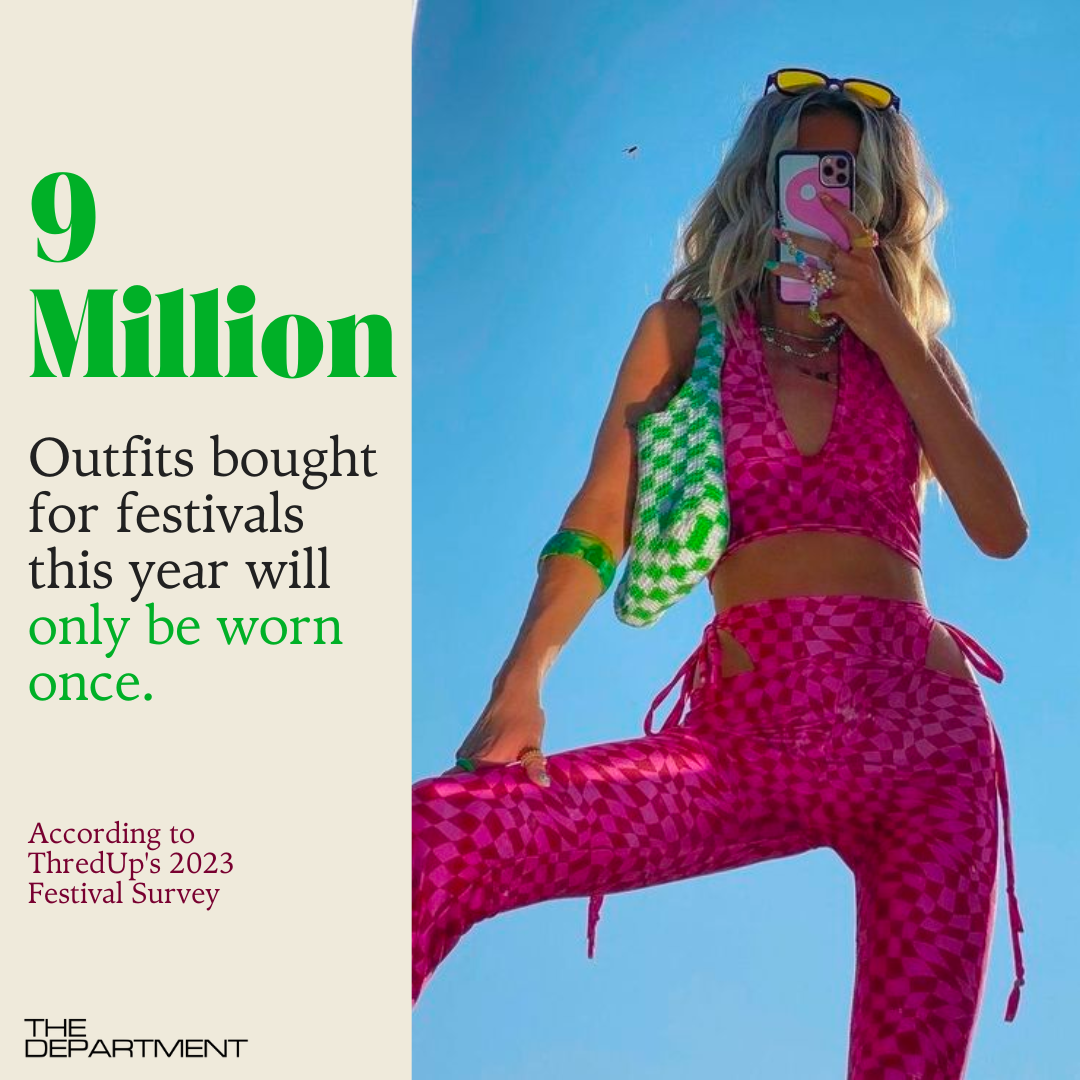
- In 2019 a british group did a survey on brit shopping habits and found found that single-use outfits for music festivals, such as Glastonbury and Coachella, alone, account for approximately $307 million worth of items per year, or about 7.5 million outfits worn only once.
- In 2022 Thread up did their own research and my mind is blown and a threw up in my mouth a little.
ThreadUP Survey Highlights:
- thredUP’s Festival Fashion survey found that an estimated 1 in 4 people in the U.S. plan to attend a music festival or concert this year.
- Nearly half (42%) of this year’s festival-goers say they plan to buy a new festival outfit. That’s an estimated 26.9M outfits purchased for the return of festival season.
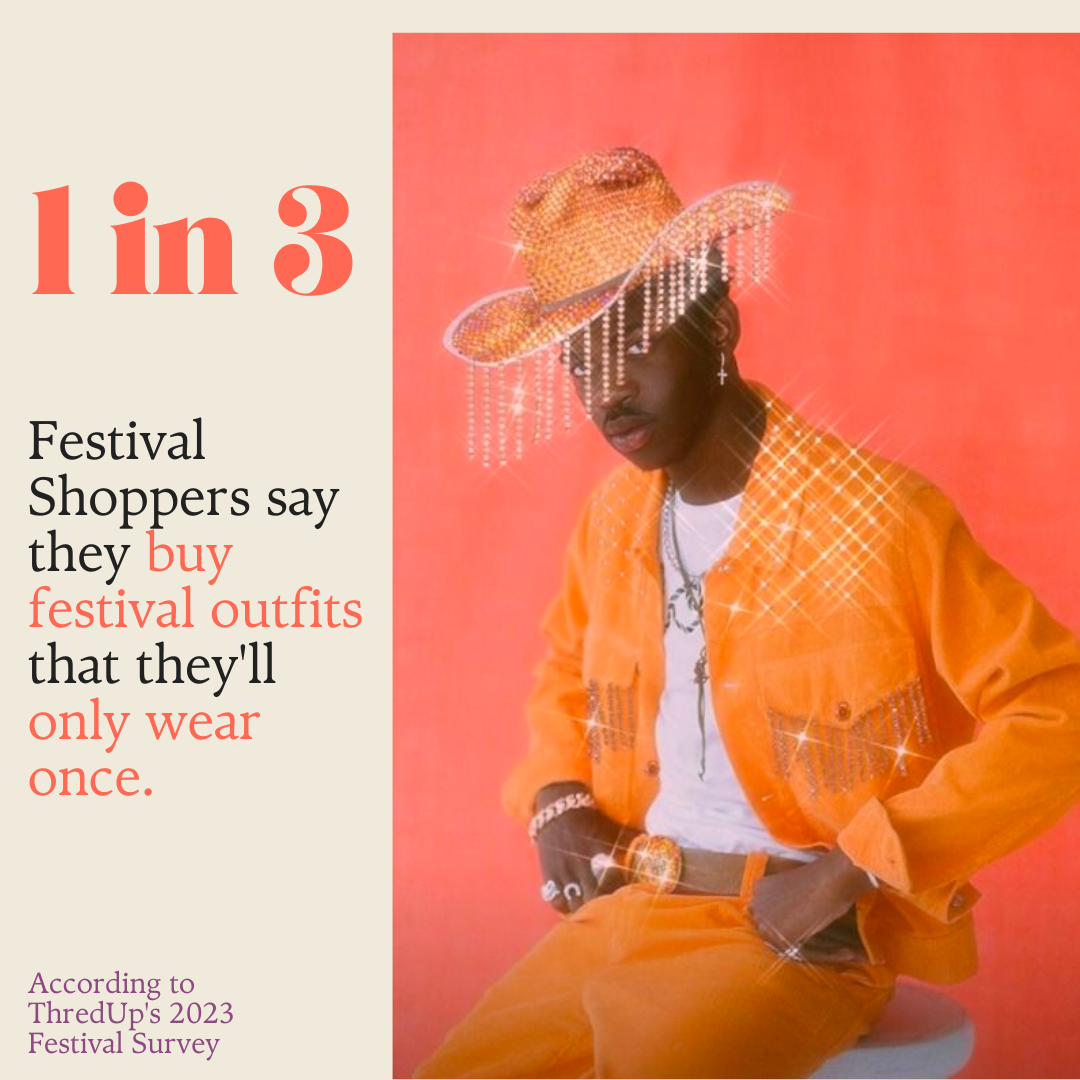
- Nearly 1 in 3 festival shoppers say they buy festival outfits that they'll only wear once.
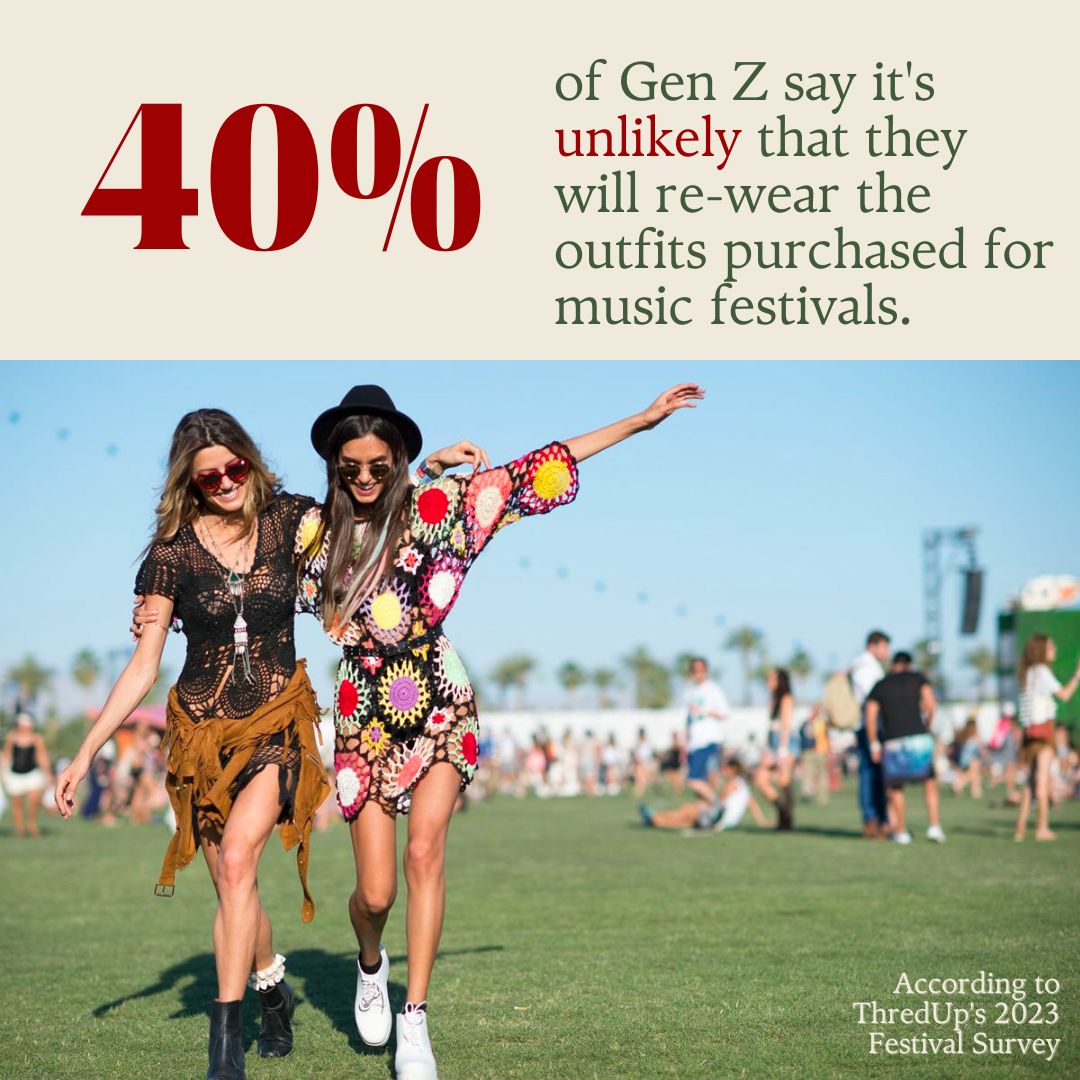
- 40% of Gen Z say it's unlikely that they will re-wear the outfits purchased for music festivals.
- If every festival shopper thrifted their festival outfit this year instead of buying one new, we would save 940M lbs of CO2E, equivalent to taking 564M cars off the road for a day.***

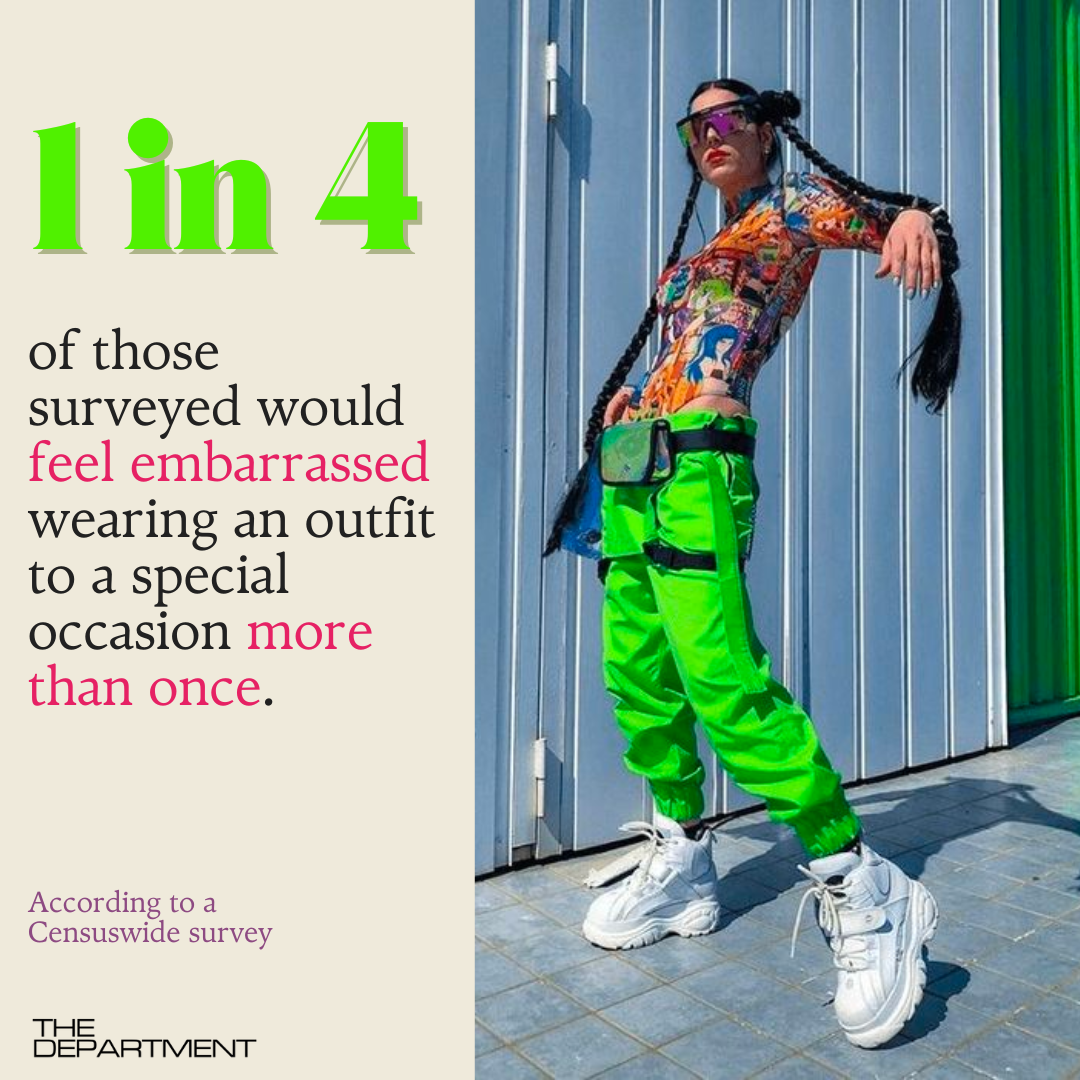
So why aren’t people re-wearing more of their festival outfits? According to The Independent, Censuswide found that, as a whole, “one in four of those surveyed would feel embarrassed wearing an outfit to a special occasion more than once.”
- But the merch isn’t just cornered to pre-festival sales and consumption - festivals themselves are turning into shopping centers for their captive audiences as well as platforms for brands to showcase themselves and align with these same influencers.
- In an article by The Cut, fashion editor Bianca Nieves and was bombarded this year with merchandise at Coachella. Frank Ocean Merchandise, Bad Bunny x Adidas collabs and OF COURSE - Revolve Fests infamous influencer haven.
The Revolve Festival
- Revolve Festival is not affiliated with Coachella but is an adjacent experience.
- It was launched in 2015 and is a very exclusive invitation-only party held the first weekend of Coachella.
- With the popularization of social media through the Aughts and Aughties, Coachella has transited from being all about the music, and more of a place to see and be seen on the internet. Nieves noted that “TikTok commentator Meghan Rienks referred to the festival as an “influencer work trip” in a comment on a post about her past experiences at the festival. “Brands want to be seen so they invite influencers to market them,” she added.
- Revolve Fest evolved out of this mindset shift and is positioned as an influencer haven - with a massive gifting suite and a full space to create content and extoll the virtues of Revolve. Amanda shared this Vice Article that shared some tiktoks from a self described Plus 1. Who did behind the scenes videos of the xperience https://www.vice.com/en/article/jgmz83/coachella-revolve-festival-influencers
- Revolve itself has a very interesting business and marketing model with customer acquisition strategy heavily focused on influencer relations and clout. In 2018 Revolve reported that 70% of their sales came from influencers - yet they have an insanely high return rate. In 2017 they reported $400 million in net sales but also had $385 in returns. So net sales are reported minus the returns that that means that half of everything was returned and that doesn’t even cover the cost of shipping on the company and the environment. It prompted Revolve to reexamine their return policy and takes away the privelege : Their modified policy read “Return restrictions can be placed on accounts that have exceeded our threshold for returns. If you have returned more than $7500 of merchandise in the last 12 months and you have sent back over 80% of the value of your purchases made in the last 12 months, your account will be subject to a modified return policy and not eligible for free returns.” You can still return goods but have to pay for shipping and a 15% restocking fee.
- So I did an Amanda Special and went into a Reddit k-hole about some of the methods and systems that Revolve uses to influence their influencers - the 70% of the sales rae coming through affiliate links that the influencers wield and get bonuses and gifts and even - say a trip to Coachella. They likened it to MLM or pyramid scheme but that really isn’t the correct analogy - but the incentives are more a kin to a little beauty company you may recall.
- “I’m somehow on their influencer list and I get emails for them all the time trying to push sales. Their most recent was that the person with the most sales on any given day gets a free coffee for a year, and the most person with the most sales for those ten days gets a $1000 gift card to revolve. Huge Mary Kay vibes.”
- I can’t remember who’s video I was watching but they said the amount of money they sell from affiliate links depends on how much their credit for shopping on the site is and what trips they go on. They have to earn those trips which gives me big mlm vibes because I see girls begging for sales on fb so they can make their trips.
Trends in Cultural Appropriation
At the intersection of culture and consumerism, the pathway to cultural appropriation is wide. And the trends have practically dominated festival culture. As mentioned - festivals are about costumery & individualism - but There's a line between freedom of expression and outright disrespect. Especially in privileged environments like music festivals, yet they were a breeding ground, especially in the aughts and aughties. I am going to look at a few but first I just want to clarify what cultural appropriation is.
“Cultural appropriation” can be defined as borrowing from someone else’s culture without their permission and without acknowledgment to the victim's culture and past. When we look back at some of the biggest offenders we find that many of the appropriations came out of the Hipster subculture movent that we talk about a lot here on The Department who are generally made up of white, middle to upper-class pro-consumerist but anti-capitalist people - who through ignorance and indifference popularized some trends, particularly leveraged at festivals to make a “statement”.
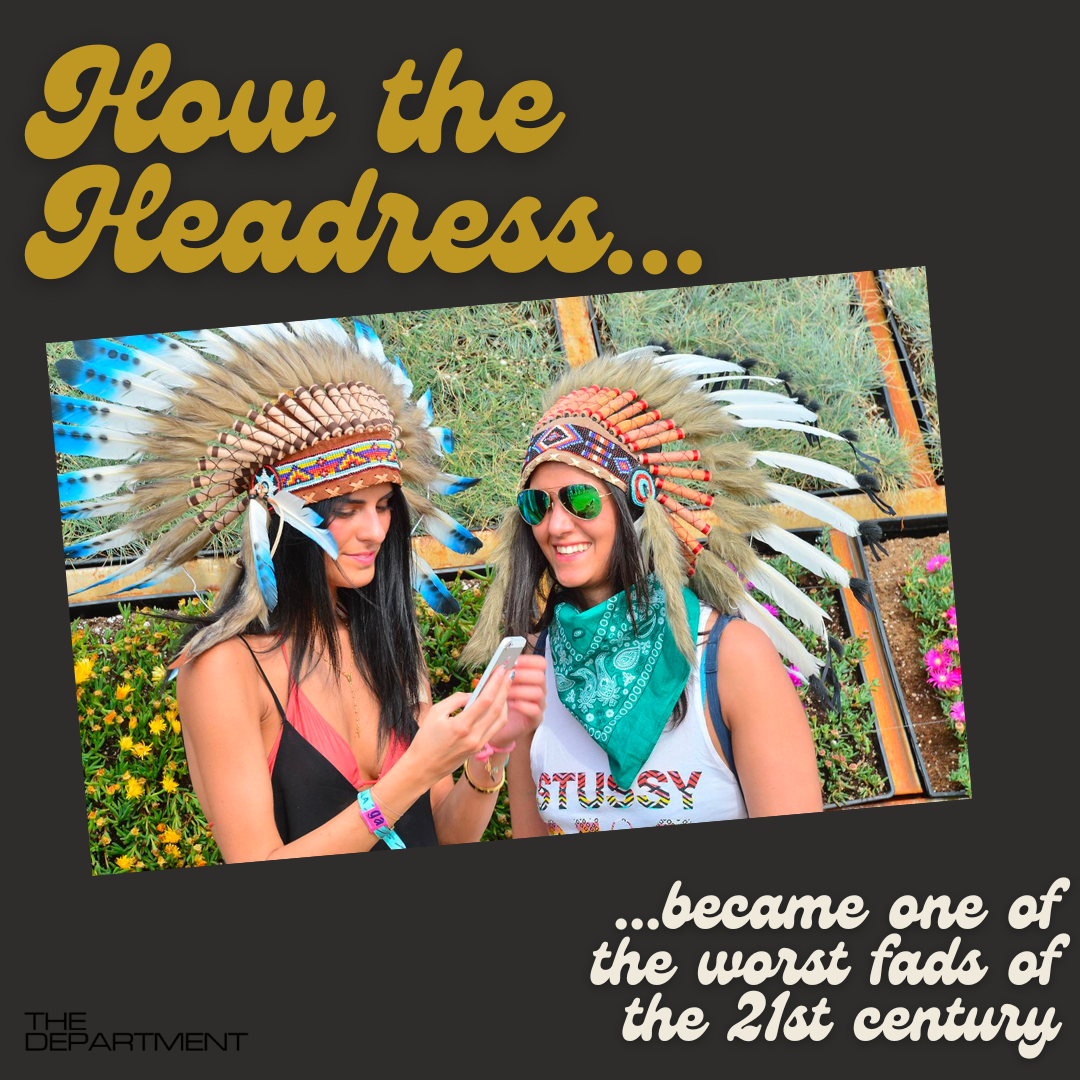
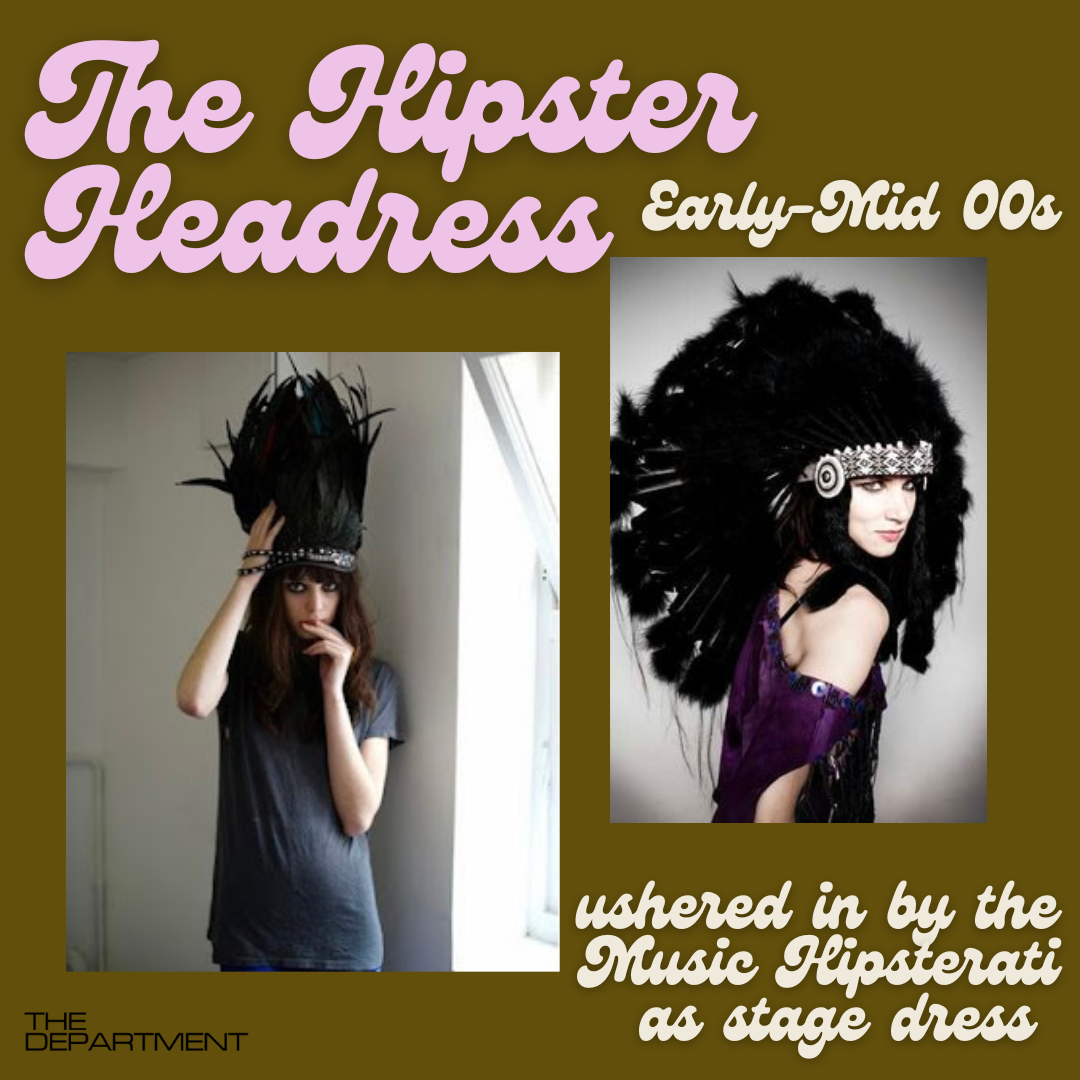
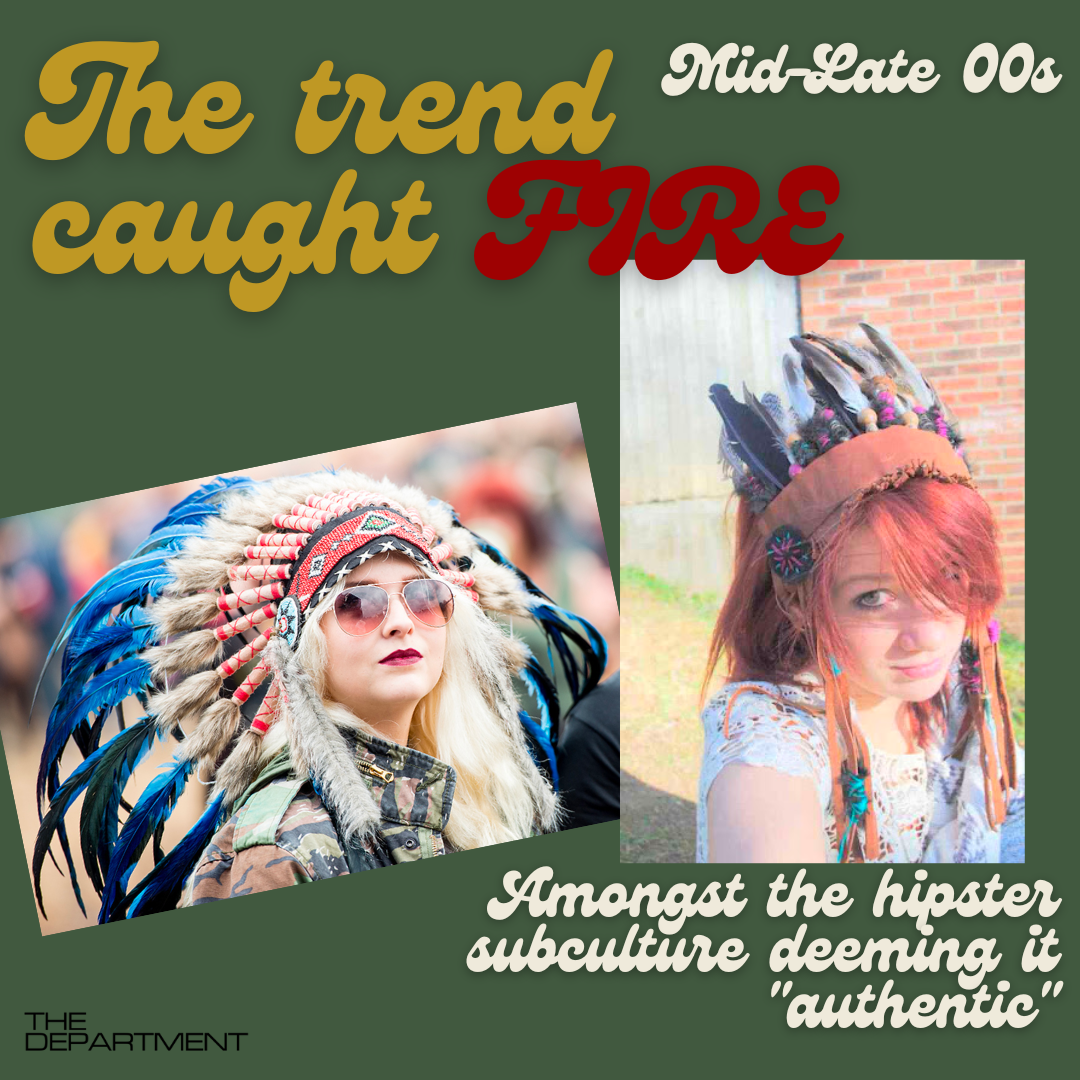
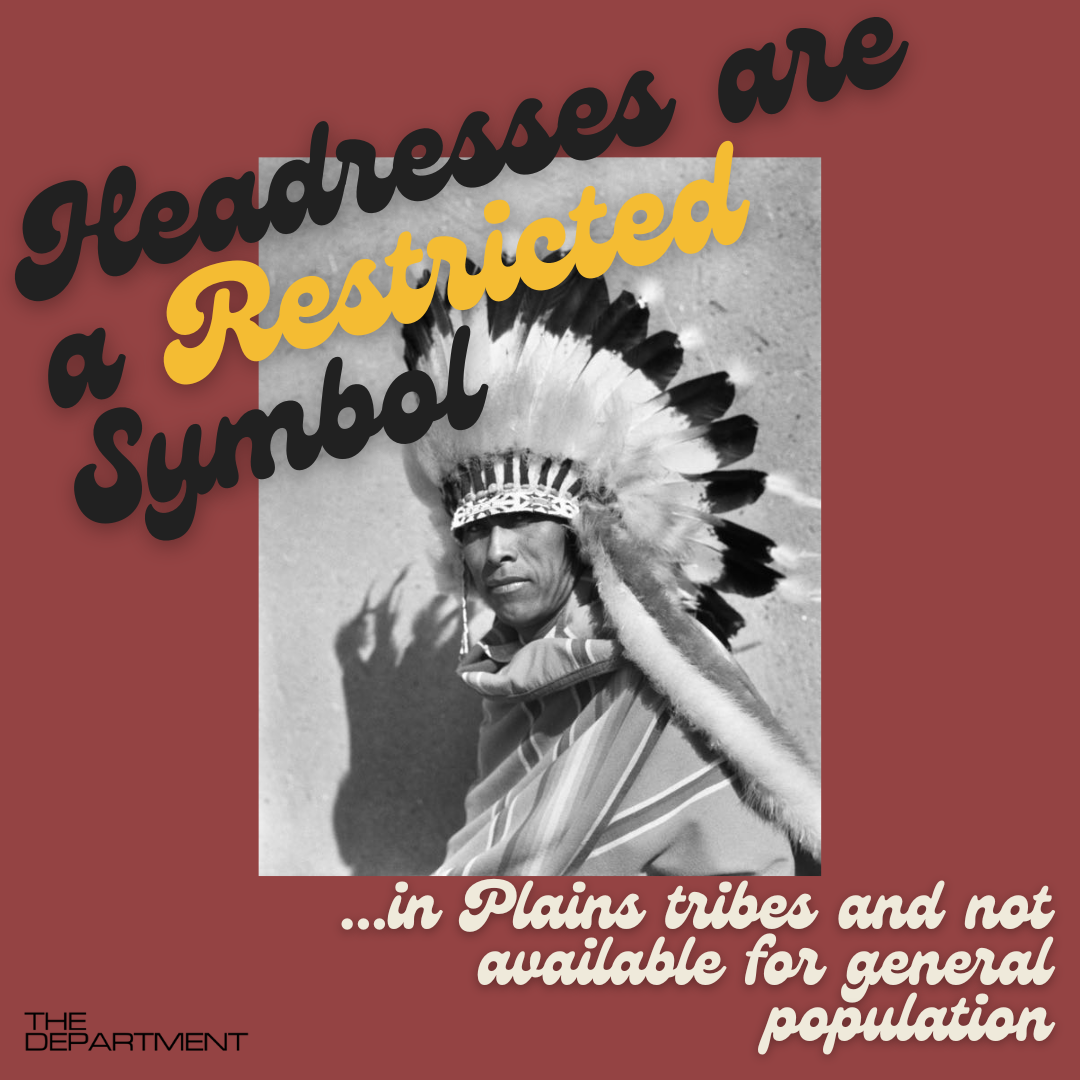
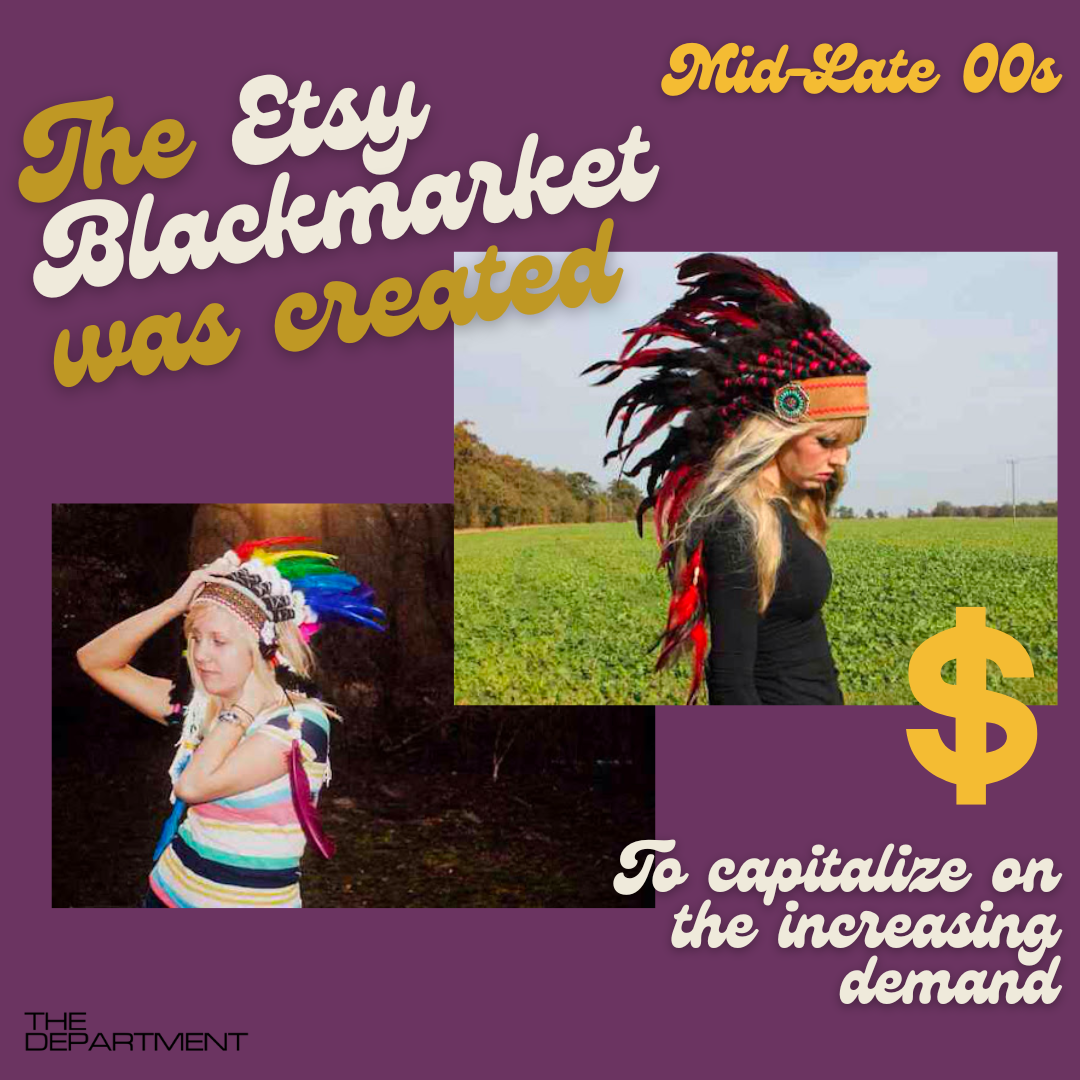
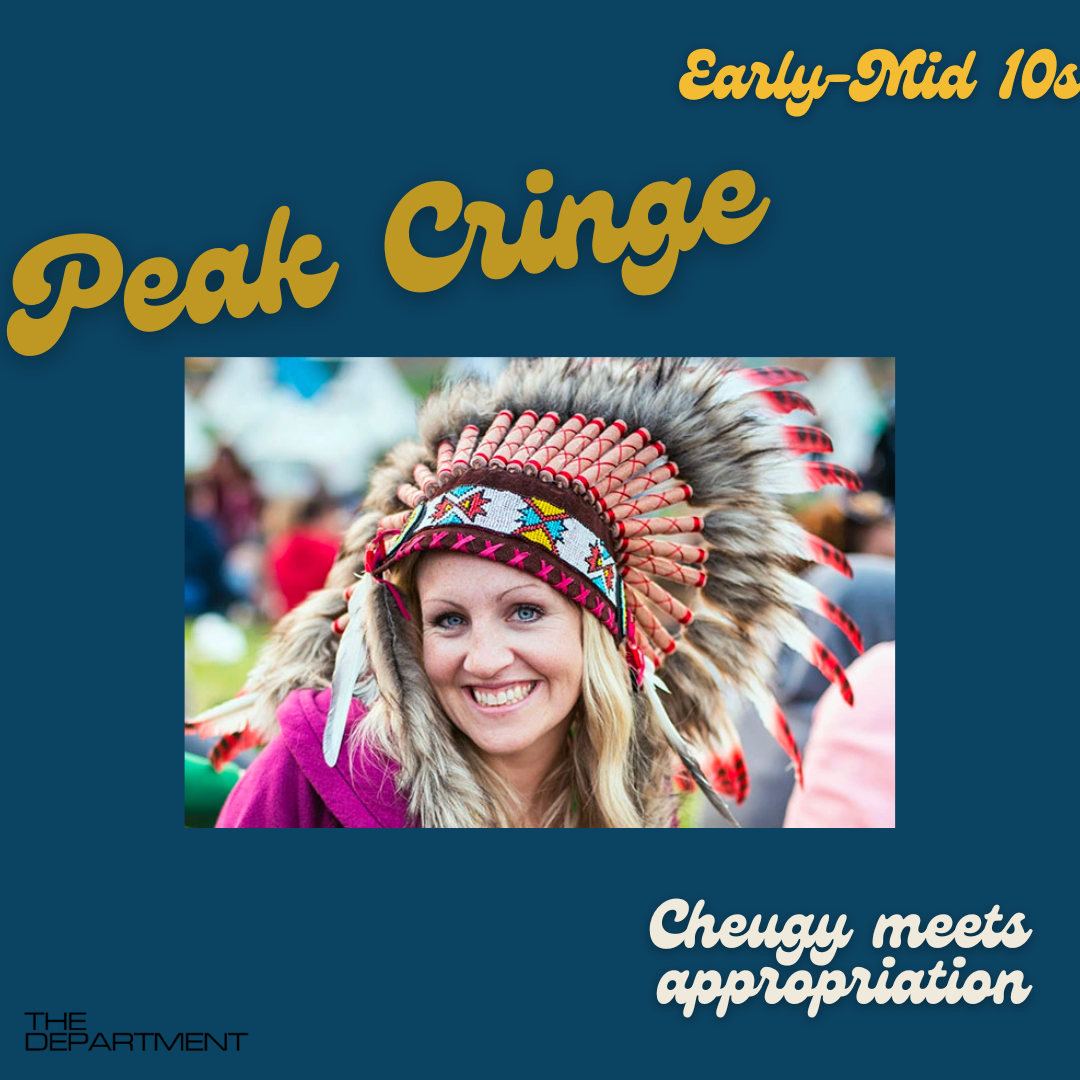
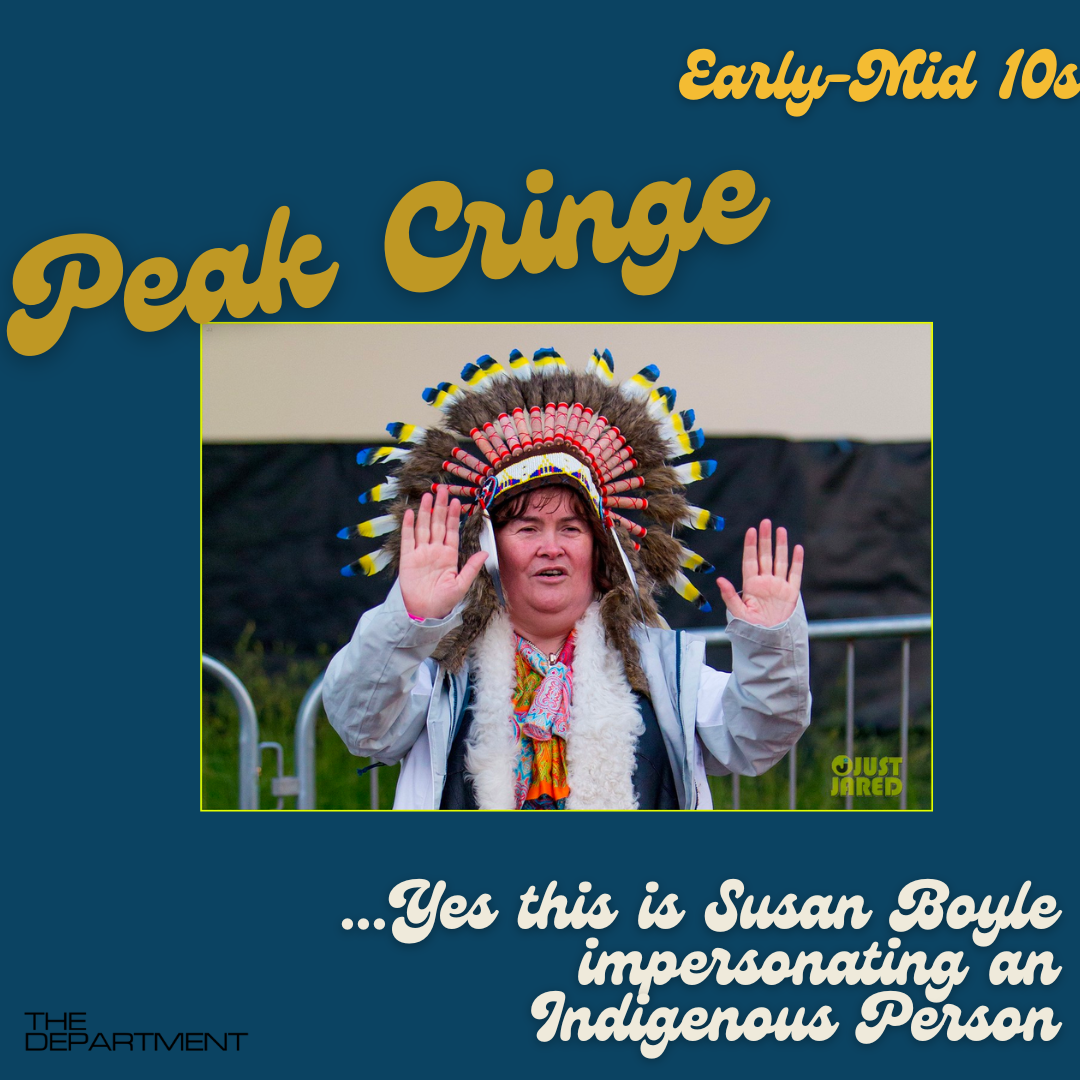
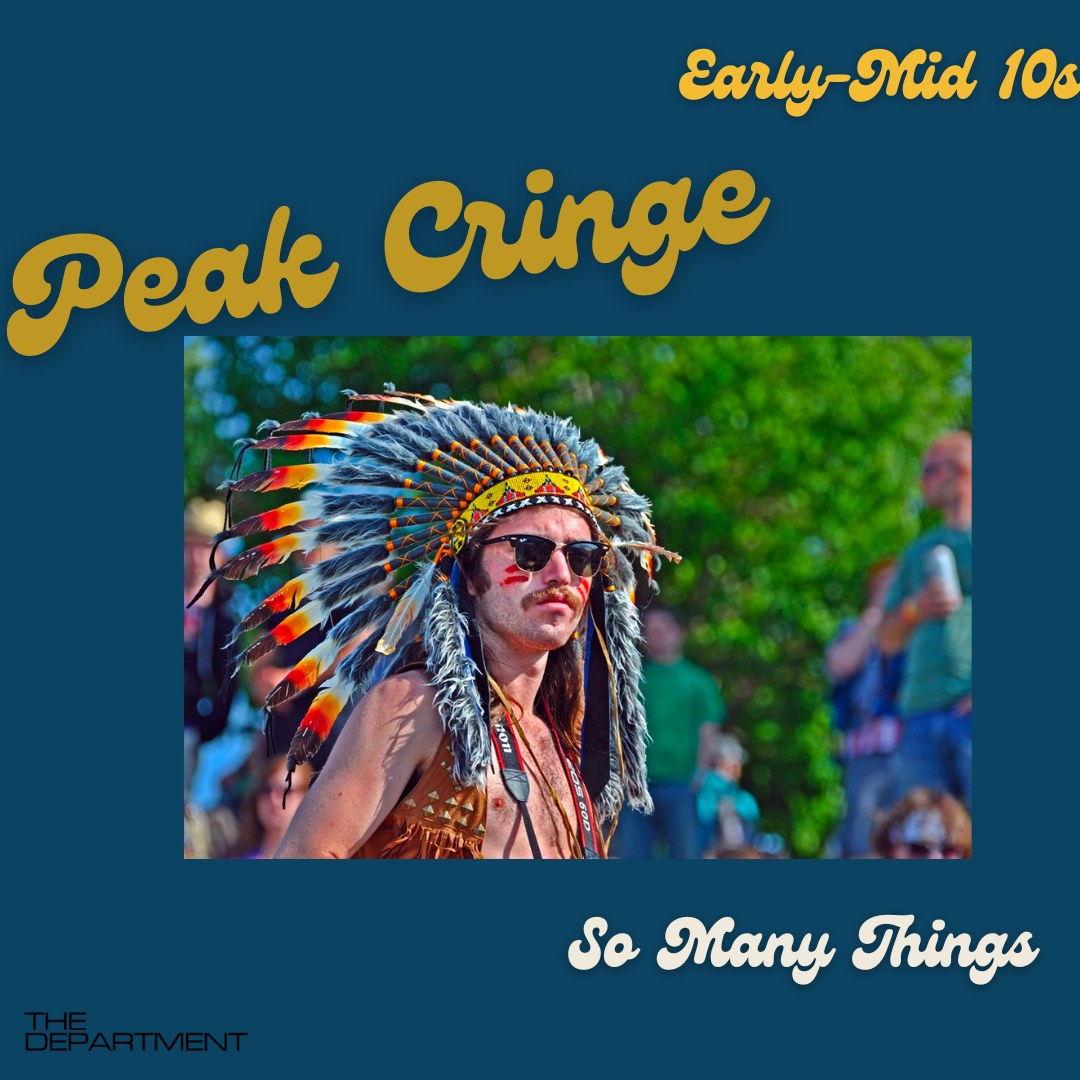
- The Native American headdress is easily one of the most adapted, appropriated and beloved problematic accessories within the space of festival fever. Wearing a headdress has endless disrespectful elements and is a vivid display of ignorance that, through many social movements, fashion editorials and music icon endorsements became a big statement piece that took years to be ripped away from the heads & hearts of nonindigenous festival folks.
- The Guardian came out with an article in 2014 called “Why the Fashion Headdress Must Be Stopped”. “This summer, headdresses, often accessorized with fluoro warpaint, have been ubiquitous at festivals from Coachella to Latitude. Festival culture has always been drawn to the idea of tribes: consider the neo-pagan aesthetic of Burning Man, the early 90s free-party scene and the hardcore hippie enclaves of Glastonbury. Put people in a field for a weekend, sleeping under canvas (and, in some cases, teepees), possibly on drugs, and some are bound to explore fantasies of escaping modern society and embracing their "natural" selves via the otherness of older cultures. Headdresses slot comfortably into the amorphous array of "tribal" knickknacks that have been keeping festival stall-holders in business for years.”
- Native aesthetics have been a widely popular fashion trend since Woodstock. But the trend of this most recent megawave came from the hipster music and fashion icons in the early aughts. Patients Zero manifested through the influential hispterati who donned headdresses and other tribal symbols as theatrical stage costumes - including Natasha Khan of Bat for Lashes and Juliette Lewis while performing in Juliette and the Licks. They emerged from the depths of the hipster-established beliefs and values around consumer culture leading to the coveting of anything that felt “authentic” or any emblems that represented a counter to the mainstream - obviously with no real comprehension of recognition of the impact they were having, appropriation and the influence that would be left behind.

- A tidal wave seemed to have transcended through the hipster trend machine with Native American symbols and accessories iterated on left and right and Festivals were one of the most popular places to show off your headdress. Kesha became a consistent figurehead and running joke for journalists during all types of performances for years and was the bane of many activists.
- Of course, Hipsters pedal in irony and nothing is more ironic than misappropriating elements of sacred indigenous tradition while recontextualizing the pieces to wear for fashion and performative reasons all while disguising the narrative as honoring the culture, But ironically all this essentially mitigates the authenticity that hipsters strived for all the while mocking tradition & culture. Additionally, the irony isn’t lost that most of these festivals where the headdresses were showcased occurred on indigenous land so the appropriation holds even more weight and more of a slight.
- In the late aughts and early aughties Headresses saw the highest demand on Etsy with shops adding their own handcrafted versions left and right to keep up with the demand. Headresses are not generally available to the public through “authentic” or indigenously crafted channels so crafters and makers jumped on the bandwagon to supply the demand…. Of course, there are pretty strong reasons why headdresses are not available through these authentic channels…..
- Chelsea Vowel, a contributor to Huffington Post who is a Plains Cree wrote in 2012 about the restriction of such traditional pieces and likens them to other symbolically restricted items that require the person wielding them to have earned them like say a military metal or diplomas. She says: “In particular, the headdress worn by most non-natives imitate those worn by various Plains nations. These headdresses are further restricted within the cultures to men who have done certain things to earn them. It is very rare for women in Plains cultures to wear these headdresses, and their ability to do so is, again, quite restricted.”
- Thus Etsy turned into essentially a black market of crafters on supplying the increasing demand and creating wholly inauthentic reproductions to fuel the appropriation and trend further.

- 2010-2011 was really the pinnacle of the trend as retailers started to jump on the bandwagon in full force. Retailers saw the trend and wanted to capitalize on the crush for all things native and indigenous. Capsule collections were released with many of the millennial-leaning retailers and the theme spread far and wide - but this also really marked the beginning of the end.
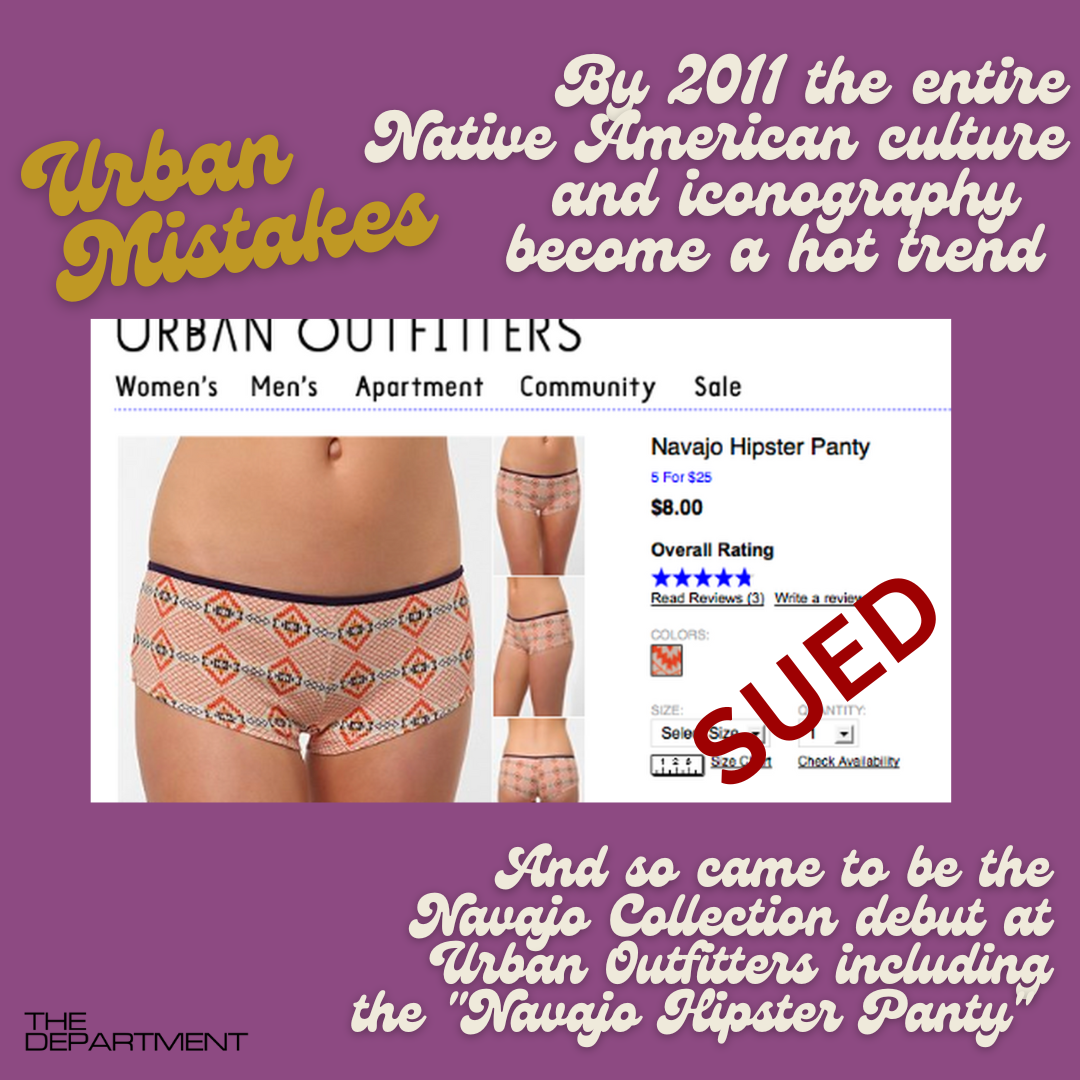
- In 2011 (Amanda you likely will remember this) - Urban came out with their Navajo collection which spanned practically all categories and caused serious issues for the retailer. A few products that caught the most ire were a flask and their “Navajo Hipster Panty”
 Outraged, guest contributor at Racialicious Native American Sasha Houston Brown wrote an open letter to Urban Outfitters:

“This past weekend, I had the unfortunate experience of visiting a local Urban Outfitters store in Minneapolis. It appeared as though the recording 'artist' Ke$ha had violently exploded in the store, leaving behind a cheap, vulgar and culturally offensive retail collection. Plastic dreamcatchers wrapped in pleather hung next to an indistinguishable mass of artificial feather jewelry and hyper-sexualized clothing featuring an abundance of suede, fringe and inauthentic tribal patterns.”

- She brought public attention not just to the fact that Urban was capitalizing on china made appropriated crap but also the fact that it was illegal and violated the Indian Arts and Crafts Act of 1990, which prohibits the "misrepresentation in marketing of Indian arts and crafts products within the United States."
- The Navajo Nation attorney general took notice and SUED Urban Outfitters in 2012 and they settled in 2016 for an undisclosed sum. The Navajo Nation claims that the retailer has sold more than $500 million worth of Navajo-branded goods using the word “Navajo” a trademarked name as a generic blanket descriptor of anything that is emblematic of native iconography.
- Hilariously - Forever21 came out with a collection right around the same time also called the Navajo collection and renamed it quickly.
- DW Diaz's New Urban Infitters Line: Genocide Chic!
- There is an article that I saw quoted many times in my research from the Native Appropriations website called “But Why Can’t I Wear A Hipster Headdress” which is a forum for discussing representations of Native peoples, including stereotypes, cultural appropriation, news, activism, and more. They eloquently break down the reasons why it is deeply problematic to don headresses or any “tribal trends”:
- Headdresses promote stereotyping of Native cultures.
- The image of a warbonnet and warpaint wearing Indian is one that has been created and perpetuated by Hollywood and only bears minimal resemblance to traditional regalia of Plains tribes. It furthers the stereotype that Native peoples are one monolithic culture, when in fact there are 500+ distinct tribes with their own cultures. It also places Native people in the historic past, as something that cannot exist in modern society. We don’t walk around in ceremonial attire everyday, but we still exist and are still Native.
- Headdresses, feathers, and warbonnets have deep spiritual significance.
- The wearing of feathers and warbonnets in Native communities is not a fashion choice. Eagle feathers are presented as symbols of honor and respect and have to be earned. Some communities give them to children when they become adults through special ceremonies, others present the feathers as a way of commemorating an act or event of deep significance. Warbonnets especially are reserved for respected figures of power. The other issue is that warbonnets are reserved for men in Native communities, and nearly all of these pictures show women sporting the headdresses. I can’t read it as an act of feminism or subverting the patriarchal society, it’s an act of utter disrespect for the origins of the practice. (see my post on sweatlodges for more on the misinterpretation of the role of women). This is just as bad as running around in a pope hat and a bikini, or a Sikh turban cause it’s “cute”.
- It’s just like wearing blackface.
- “Playing Indian” has a long history in the United States, all the way back to those original tea partiers in Boston, and in no way is it better than minstral shows or dressing up in blackface. You are pretending to be a race that you are not, and are drawing upon stereotypes to do so. Like my first point said, you’re collapsing distinct cultures, and in doing so, you’re asserting your power over them. Which leads me to the next issue.
- There is a history of genocide and colonialism involved that continues today.
- By the sheer fact that you live in the United States you are benefiting from the history of genocide and continued colonialism of Native peoples. That land you’re standing on? Indian land. Taken illegally so your ancestor who came to the US could buy it and live off it, gaining valuable capital (both monetary and cultural) that passed down through the generations to you. Have I benefited as well, given I was raised in a white, suburban community? yes. absolutely. but by dismissing and minimizing the continued subordination and oppression of Natives in the US by donning your headdress, you are contributing to the culture of power that continues the cycle today.
- By the mid 2010’s and after years of deprogramming and articles from every fashion and lifestyle journalist out there to educate those last few people the trend lost steam. Many festivals started to ban headdresses from the grounds because they were such a problematic festival trend. And really the word spread, friends holding friends accountable and the trend crawled back under the cesspool it crawled out of and hopefully is there to stay. Recent reports from this year’s Coachella noted that there wasn’t a native american headdress to be found this year.

The Bindi
The Bindi was another hot trend fueled by music icons and then taken up by the masses traveling to Burning Man where glitter was banned but bindies were embraced or pretty much any or all other festivals. According to a Vice article from 2015 titled “A cultural history of white girls wearing bindis” the first wave of bindi appropriation came out of the 90s when Henna mania swept the US, Gwen Stefanie during I’m Just a Girl period as well as Madonna when she was going through her New Age exploration period. It simmered down but came back with a vengeance with the popularization of Slumdog Millionaire in 2008. Lady Gaga, Selena Gomez, Katy Perry, the Jenners and many more began wearing the iconic symbol.
In case you didn’t realize - Bindis are religious symbols historically worn by women in South Asia, Southeast Asia, and China. The bindi has many scriptural and societal meanings that are sacred and grounded in rich tradition. For example, in the Hindu culture, bindis are used to symbolize married women and are a sign of good fortune.


Activists fought tooth and nail to bring awareness to the appropriation. Celebrities ignored the complaints for a while until the trend was squashed (for the most part) in the later half of the last decade.
There are many other appropriations and likely will be a few more - like non black people adopting cornrows.
But I will leave these for perhaps another time.
So whats the now you ask?
Well, Many Millennials are aging out of the festival scene - and GenZ is taking over as they start to age into the festivities.
As of 2023 GenZers are reportedly 1.6 times more likely to attend music festivals than Millennials and this swell has certainly been noted in the lineup that is clearly targeted toward the Zoomers. With this shift comes new trends and different values. Millennials crawled and fucked up many times so that Gen Z could run.
The lineup for the 2023 Coachella is considered historic - it was the most diverse since its inception - The Santiago Solutions Group reports:
“Since the festival’s early years, 2023 is the first year in which all the headliners are diverse. Headlining this year’s event are Frank Ocean (African American and LGBTQ), Bad Bunny (Puerto Rican), and BLACKPINK (South Korean). Bad Bunny and BLACKPINK are also non-English dominant headliners, as Bad Bunny’s music is primarily in Spanish, and BLACKPINK’s music is in Korean and English. For reference, past headliners have been Lady Gaga, Beyonce, The Weekend, Radiohead, Calvin Harris, Eminem, Guns and Roses, Kendrick Lamar, Ariana Grande, Harry Styles, Billie Eilish, and more. This year’s lineup of headliners is especially historic, given that BLACKPINK is Coachella’s first-ever Korean headliner and Bad Bunny is the first Latino artist ever to headline any major American music festival.”

The firm provided some analysis and consumer statistics around the diversity of what they call “super fans” looking at how GenZ vs Millenials breakdown across other factors like race and LGBTQ status: “GenZ is not alone in its love of attending music festivals. Compared to White Non-Hispanics, Asian music fans are 2 times more likely than White Non-Hispanic music fans to attend music festivals, followed by Hispanics…Compared to other music fan segments, Asian Millennial music super fans have a significantly higher music festival attendance, with almost 1 in 4 attending a music festival in the last year. Music fans who are Asian and Hispanic are also much more likely than White Non-Hispanic music fans to consume music on YouTube, Spotify, and Apple Music. Considering this year’s diverse lineup with Hispanic, Asian, and African American headliners, it’s likely that fans who share the same culture or heritage as the headliners will flock to this year’s Coachella festival. “
Coachella came and went - They did finally sell out in the first weekend but didn’t sell out right away in the second. Folks were buzzing about that - with some saying it is the line up and others saying that the prices were too high or inflation causing cash flow issues for prospective festival goers. General passes were $540 and over $1K for VIP.
And what were folks wearing? Well, a lot of Crochet core, Western, 90’s and 70’s looks…..
The Cut article I mentioned earlier reports
“As the weekend was wrapping up, so was the festival fashion. The common denominator? Comfortable kicks, cowboy boots, and what I believe the biggest trend of the season will be: midi-maxi skirts. I didn’t notice as much cultural appropriation happening (thank goddess) and there was not a single feathered headdress in sight (maybe because Vanessa Hudgens skipped this year.) And I also noticed less “festival style” looks, a.k.a. buying looks just for Coachella. The environment thanks you.”
